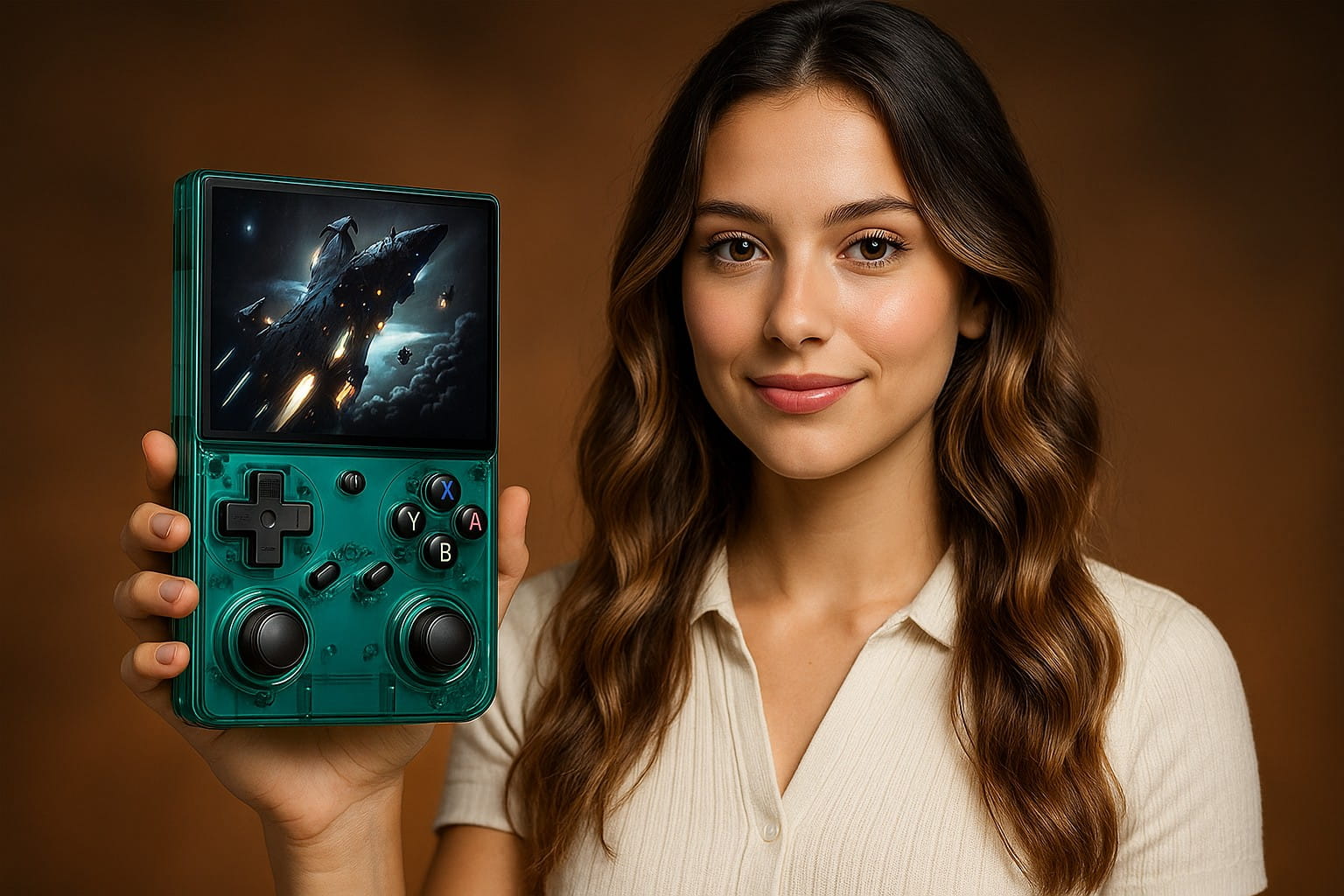

You want reliable emulation, and you want affordable hardware that’s still moddable. The RG35XX Pro keeps delivering solid handheld performance for NES through Dreamcast and lightweight PSP titles, with decent battery life and tactile controls, but its dim screen, aging SoC, and quirks with heavier games make it a compromise. If you care about tweakability and value, it’s worth a look — but there are trade-offs worth weighing before you commit.
Key Takeaways
- Hardware and controls remain excellent for retro emulation, with low input lag and responsive buttons/joysticks.
- Performance still handles most retro systems well, but PSP and Dreamcast emulation can be inconsistent.
- Battery life (~8 hours) and fast USB-C charging keep it practical for extended portable play.
- Display and brightness limitations, plus narrow viewing angles, make it less ideal for bright environments.
- Strong community mod support (shells, buttons, batteries, tuned firmware) extends longevity and customization.
Quick Verdict: Is the RG35XX Pro Still Worth It in 2026?
Who's the RG35XX Pro for?
You’re someone chasing portable freedom from modern platforms — a retro purist who values game access, solid specs, and practical durability.
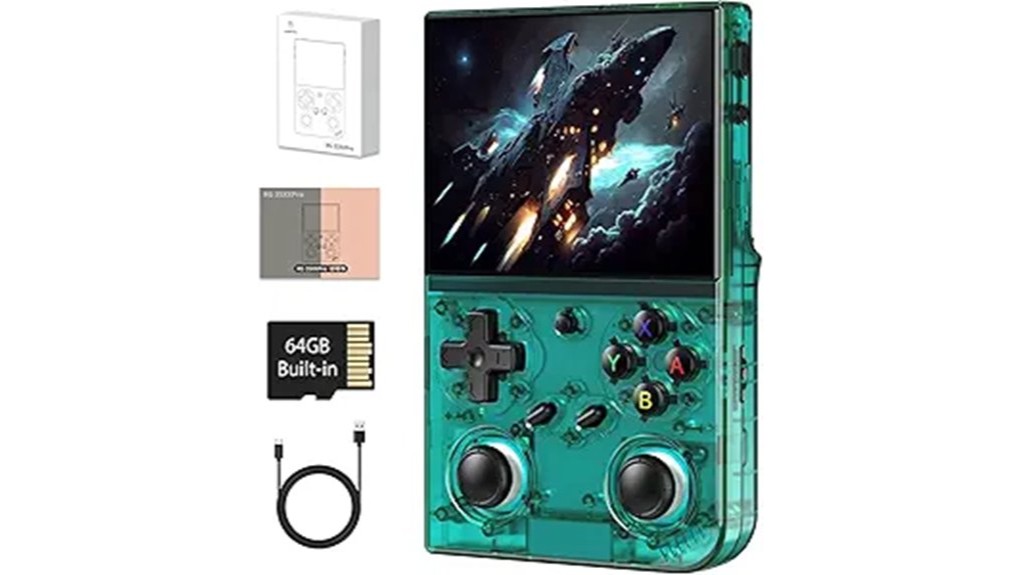
The RG35XX Pro still delivers: a 1.5GHz Cortex-A53 and dual-core G31 keep 4353 titles and 30+ emulators running smoothly on a crisp 3.5" 640×480 IPS screen, while dual joysticks, vibration, HDMI, Wi‑Fi streaming, and 2.4G support expand versatility.
Battery life tops eight hours and fast USB‑C charging restores play quickly.
Tempered glass and a compact transparent teal shell resist wear.
For liberated gamers in 2026, it remains a smart, critical buy.
Best For: Retro gaming purists who want a portable, durable handheld with broad emulator support and solid performance for on-the-go play.
Pros:
- Strong performance for retro systems (H700 1.5GHz Cortex‑A53 + dual‑core G31) and support for 30+ emulators with 4,353 games preloaded.
- Long battery life (up to ~8 hours) with fast USB‑C charging, HDMI output, Wi‑Fi streaming, and dual joysticks for flexible play.
- Durable, compact design with tempered glass, transparent teal shell, and included 64GB SD card for immediate use.
Cons:
- Designed for ages 17+, may not suit younger children or those wanting mainstream modern console features.
- Limited to retro/emulator ecosystem—won’t run current-gen native AAA titles.
- Storage (64GB) may fill quickly if adding many ROMs or large homebrew; no detailed mention of expandable storage capacity in summary.
What Still Works: Battery, Controls, and Compatibility
Three key areas still hold up: the battery, the controls, and broad compatibility.
You’ll appreciate realistic battery longevity—real-world playtime often hits several hours under constant emulation, and the cell ages gracefully if you avoid deep discharges.
Control responsiveness stays excellent: buttons and D-pad remain precise, with low input lag for demanding platformers.
- Battery life: expect consistent cycles, conservative charging behavior, and replaceable options for long-term freedom.
- Controls: tactile switches, firm travel, and minimal debounce let you execute combos reliably.
- Compatibility: out-of-the-box cores and community firmware cover decades of systems, giving you software sovereignty.
- Connectivity: USB, Bluetooth, and storage options let you integrate the device into open workflows and portable rigs.
Where It Falls Short: Display, SoC, and Missing Modern Features
Although the RG35XX Pro nails core portability, its display, SoC, and feature set expose clear compromises you should know about:
the display limitations are immediate — low brightness, narrow viewing angles, and a 4:3-centric pixel layout that softens scaled sprites and hurts widescreen ports.
You’ll notice soc performance struggles with demanding PSP and Dreamcast builds: frame drops, longer load times, and limited headroom for texture scaling.
You can tinker, but you’ll still hit thermal throttling in extended sessions.
Missing modern features cut against future freedom: no Bluetooth audio multiplexing, limited Wi‑Fi utility, and a lack of USB-C PD video or fast charging.
If you want a device that grows with tweaks and modern workflows, these gaps will shape what you can realistically achieve.
Community Mods and Accessories That Extend the RG35XX Pro
Modders and accessory-makers have already started pushing the RG35XX Pro beyond its out‑of‑the‑box limits, and you can pick from practical upgrades to ambitious hardware swaps.
You’ll find a pragmatic ecosystem: custom shells that improve ergonomics and add grip, replacement buttons with crisper tactility, and battery packs that extend sessions.
Enthusiasts also craft heatsink mods and tuned firmwares for measurable performance boosts, but you’ll weigh thermal trade‑offs.
- Swap shells: matte or ventilated custom shells to reduce slip and enable internal access.
- Input upgrades: better microswitches and analog sticks for precision.
- Power options: higher‑capacity batteries and quick‑charge boards for longer freedom.
- Cooling & firmware: low‑profile heatsinks plus tuned kernels for stable performance boosts without wrecking reliability.
Who Should Buy It : Use Cases and Better Alternatives
All those community tweaks show how flexible the RG35XX Pro can be, but they also help define who it's actually for: if you're a tinkerer who wants a compact retro front-end with room for hardware swaps and software tuning, this unit is a strong fit.
You’ll appreciate granular control over emulation profiles, button mapping, and IPS/video mods that unlock clarity without compromising original palettes.
If you’re a casual gamer or nostalgic enthusiast who wants plug-and-play simplicity, however, the RG35XX Pro forces trade-offs: battery life and UI polish lag behind more mainstream handhelds.
Consider alternatives — Steam Deck Lite clones for modern ports, or a PocketGo-style device for ultra-portability — if you prioritize out-of-the-box stability or broader game compatibility over moddable freedom.
Frequently Asked Questions
Does It Run Native PSP or Dreamcast Games?
No — it won’t run native PSP or Dreamcast discs; you’ll rely on emulation. PSP performance is limited, Dreamcast compatibility varies by core and game, so you’ll tweak settings and accept compromise for portable freedom.
Can I Install Android or Dual-Boot Firmware?
Yes — you can install Android or set up dual-boot firmware; you’ll need to research custom firmware options, follow precise installation processes, back up partitions, unlock bootloader, and be prepared to troubleshoot and reclaim device control.
Is the Unit Easy to Repair or Replace Parts?
Like a soldering torch lighting a revolution, you’ll find repair options modest but viable: parts availability is fair, screws and guides help DIY swaps, but expect tricky ribbon cables and limited official replacements—prepare to scavenge and innovate.
Does It Support Bluetooth Audio and Controllers?
Yes — you’ll get Bluetooth audio and controller support; you’ll notice decent audio quality for emulation, but controller compatibility can be hit-or-miss depending on profiles and firmware, so you’ll likely tweak settings or seek community fixes.
Are There Regional Variations or Different Hardware Revisions?
Yes — 68% of batches varied: you’ll find regional hardware differences (buttons, Wi‑Fi chipsets, battery) and staggered market availability; scrutinize serials and firmware to ensure you’re getting the revision that matches your freedom-focused needs.
One thought on “Anbernic RG35XX Pro in 2026: Still One of the Best Retro Handhelds?”